
Tirzepatide Side Effects: What's Normal and When to See a Doctor
Medically reviewed by Dr. Amin · Last updated 12 October 2026
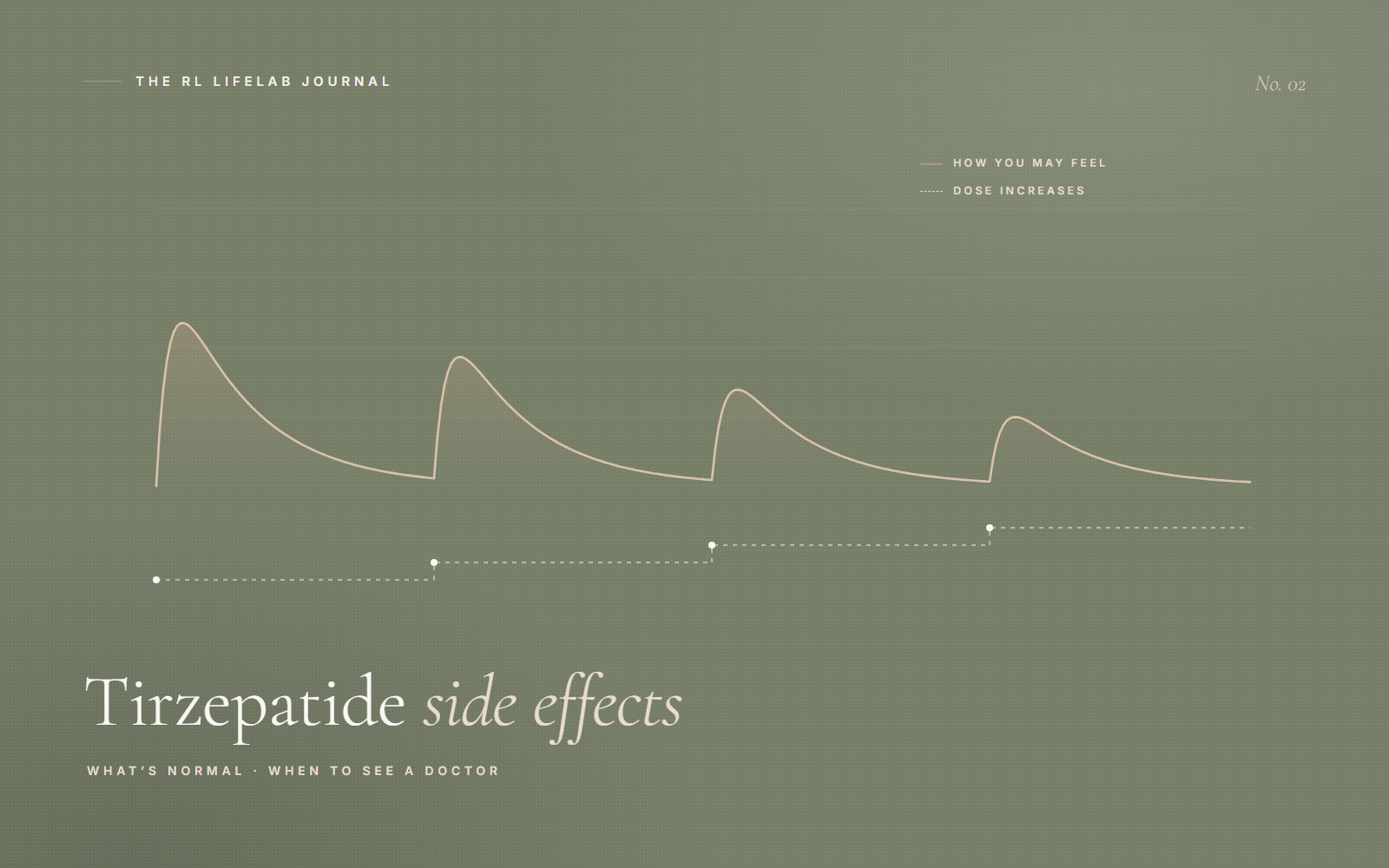
Quick answer: The most common side effects of tirzepatide are digestive: nausea, diarrhoea, constipation and vomiting. In clinical trials they were mostly mild to moderate, happened mainly when the dose was increased, and eased over time. Serious side effects are rare, but some symptoms, such as severe stomach pain that does not go away, need a doctor straight away.
What are the most common side effects of tirzepatide?
Most side effects involve the stomach and gut. In the trials that tested tirzepatide for weight management, these were the most common, shown as the share of people affected on tirzepatide (5 to 15 mg weekly) compared with placebo:
- Nausea: 25-29% (placebo 8%)
- Diarrhoea: 19-23% (placebo 8%)
- Constipation: 11-17% (placebo 5%)
- Vomiting: 8-13% (placebo 2%)
- Stomach pain or indigestion: 9-10% (placebo 4-5%)
- Injection-site redness or itching: 6-8% (placebo 2%)
- Tiredness: 5-7% (placebo 3%)
- Hair loss: 4-5% (placebo 1%)
Other less common effects included burping, heartburn, wind, bloating and dizziness.
How long do tirzepatide side effects last?
For most people, digestive side effects are temporary. According to the prescribing information, most nausea, vomiting and diarrhoea happened while the dose was being increased and became less frequent over time. That is why doctors usually start at a low dose and increase it step by step.
Very few people stopped because of them: between 1.9% and 4.3% of people on tirzepatide stopped because of digestive side effects, compared with 0.5% on placebo.
How can I reduce nausea on tirzepatide?
Tirzepatide makes you feel full sooner, so eating the way you used to often causes the queasiness. These simple habits help many people:
- Eat smaller meals, slowly, and stop as soon as you feel full
- Go easy on oily, fried, very sweet or very spicy food
- Sip water throughout the day instead of drinking a lot at once
- Avoid lying down straight after eating
- Tell your doctor if nausea makes it hard to eat or drink. Your dose plan may need adjusting.
What helps with constipation on tirzepatide?
Eating less can also mean less fibre and fluid, which slows the gut. Drink enough water, include vegetables, fruit and wholegrains at meals, and keep moving. A daily walk helps. If you have not opened your bowels for several days, or you have pain or bloating, speak to your doctor or pharmacist before taking a laxative.
Does tirzepatide cause hair loss?
Some people notice hair shedding. In the trials, 4-5% of people on tirzepatide reported hair loss, compared with 1% on placebo, and it was more common in women (7.1%) than men (0.5%). Doctors often link this kind of shedding to rapid weight loss itself, and it is usually temporary. Eating enough protein helps. If you are worried, mention it at your next review.
When should I see a doctor?
Serious side effects are uncommon, but get medical help promptly if you have any of these:
- Severe stomach pain that does not go away, sometimes spreading to the back, with or without vomiting. This can be a sign of an inflamed pancreas (pancreatitis).
- Pain in the upper right of the stomach, fever, or yellowing of the skin or eyes. These can be signs of gallbladder problems. In the trials, gallbladder inflammation affected 0.7% of people on tirzepatide, compared with 0.2% on placebo.
- You cannot keep fluids down, you pass very little urine, or you feel faint. Dehydration from vomiting or diarrhoea can strain the kidneys.
- Swelling of the face, lips or throat, or difficulty breathing. These are signs of a serious allergic reaction. Seek emergency care.
- A lump or swelling in the neck, hoarseness, or trouble swallowing.
- Shakiness, sweating, confusion or a racing heart if you also take insulin or other diabetes medicines, because these can be signs of low blood sugar.
Who should not use tirzepatide?
Tirzepatide is a prescription medicine and is not suitable for everyone. It should not be used by anyone with a personal or family history of medullary thyroid cancer or MEN2 syndrome. Speak to a doctor first if you:
- Are pregnant, breastfeeding or planning a pregnancy
- Have had pancreatitis or gallbladder disease
- Have severe digestive problems, such as slow stomach emptying (gastroparesis)
- Have diabetic eye disease (retinopathy)
- Take insulin or other diabetes medicines
Two things people often forget to mention
- The contraceptive pill. Tirzepatide can make the pill less reliable. The prescribing information advises using a non-oral method, or adding a barrier method such as condoms, for 4 weeks after starting and for 4 weeks after each dose increase.
- Surgery or sedation. Tell the doctor or dentist that you take tirzepatide before any procedure that needs anaesthesia or sedation.
Frequently asked questions
Is nausea normal on tirzepatide?
Yes. Nausea is the most common side effect, affecting about 25-29% of people in the weight-management trials. It usually appears after starting or increasing the dose and eases over the following weeks.
Do tirzepatide side effects go away?
For most people, yes. Digestive side effects happened mainly during dose increases and became less frequent over time. Only 1.9-4.3% of people in the trials stopped because of them.
Is losing my appetite normal?
Yes. Feeling full sooner is how tirzepatide works. Still aim for regular small meals with enough protein and fluids, and tell your doctor if you are struggling to eat or drink.
Does tirzepatide affect heart rate?
Slightly. In the trials, average heart rate rose by about 1 to 3 beats per minute. Tell your doctor if you notice a racing or pounding heart at rest.
Should I stop tirzepatide if I feel unwell?
Do not stop or change your dose on your own. Speak to your doctor, who may adjust your plan. If you have any of the warning signs listed above, seek medical help straight away.
The bottom line
- Most tirzepatide side effects are digestive, mild to moderate, and temporary.
- They are most likely when the dose goes up, which is why doses are increased slowly.
- Small meals, steady fluids and simple food choices help many people.
- Know the warning signs, and never adjust a prescription medicine without your doctor.
Want to understand how tirzepatide compares with newer options? Read Tirzepatide vs Retatrutide: What's the Difference? If you have questions about your own situation, take our free wellness assessment or book an online consultation with a doctor.
This article is for general education only and is not medical advice. It does not replace a consultation with a qualified doctor.
References
- Tirzepatide (weight management) prescribing information, US Food and Drug Administration label, revised 2026. DailyMed
- Jastreboff AM, et al. Tirzepatide Once Weekly for the Treatment of Obesity (SURMOUNT-1). N Engl J Med. 2022;387:205-216. doi:10.1056/NEJMoa2206038